Field armour
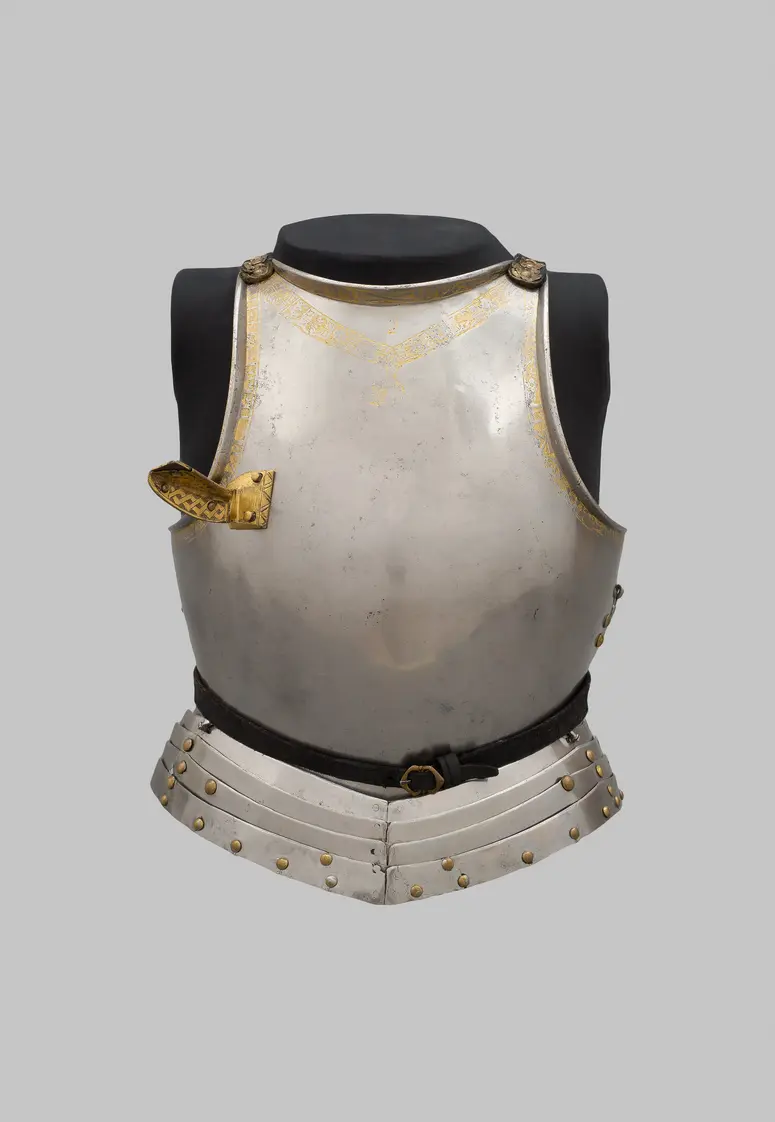
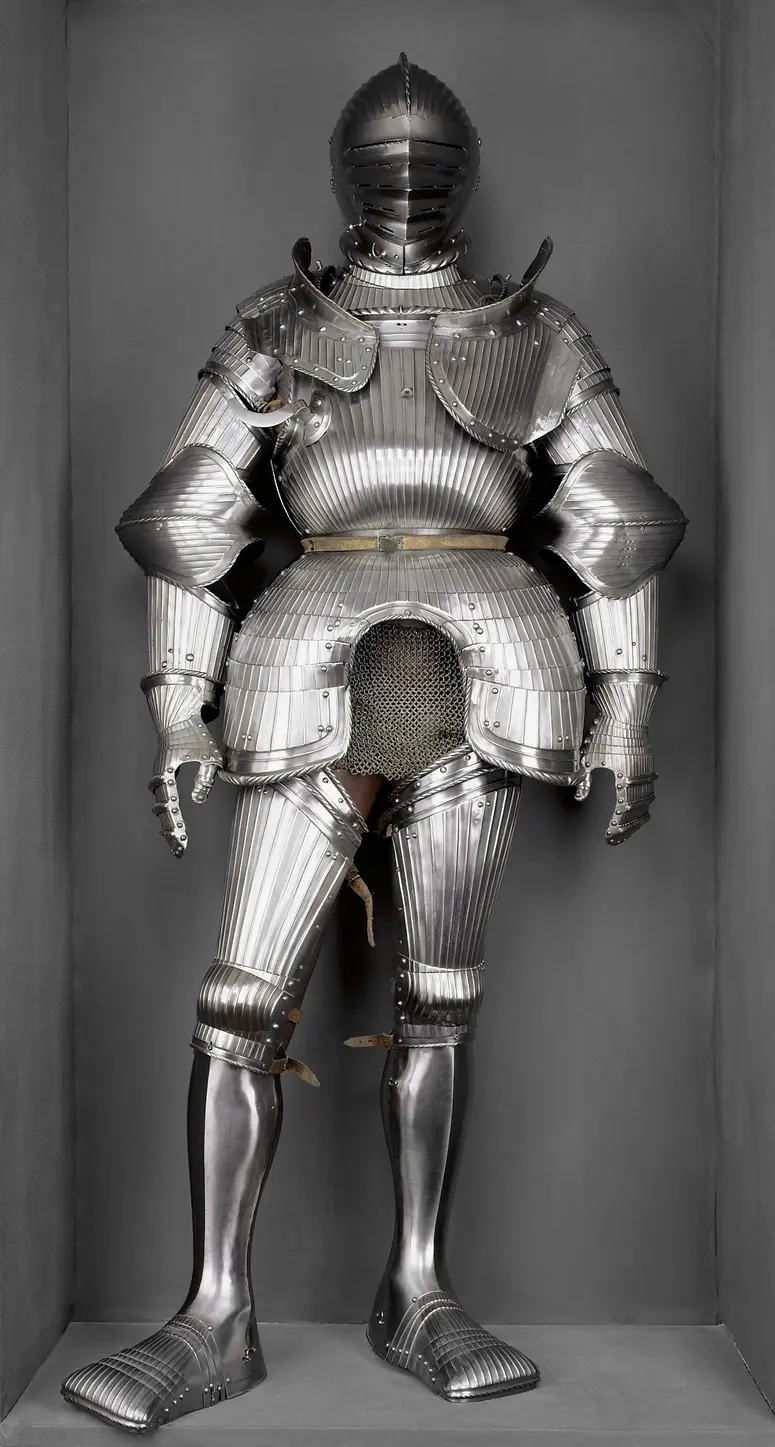
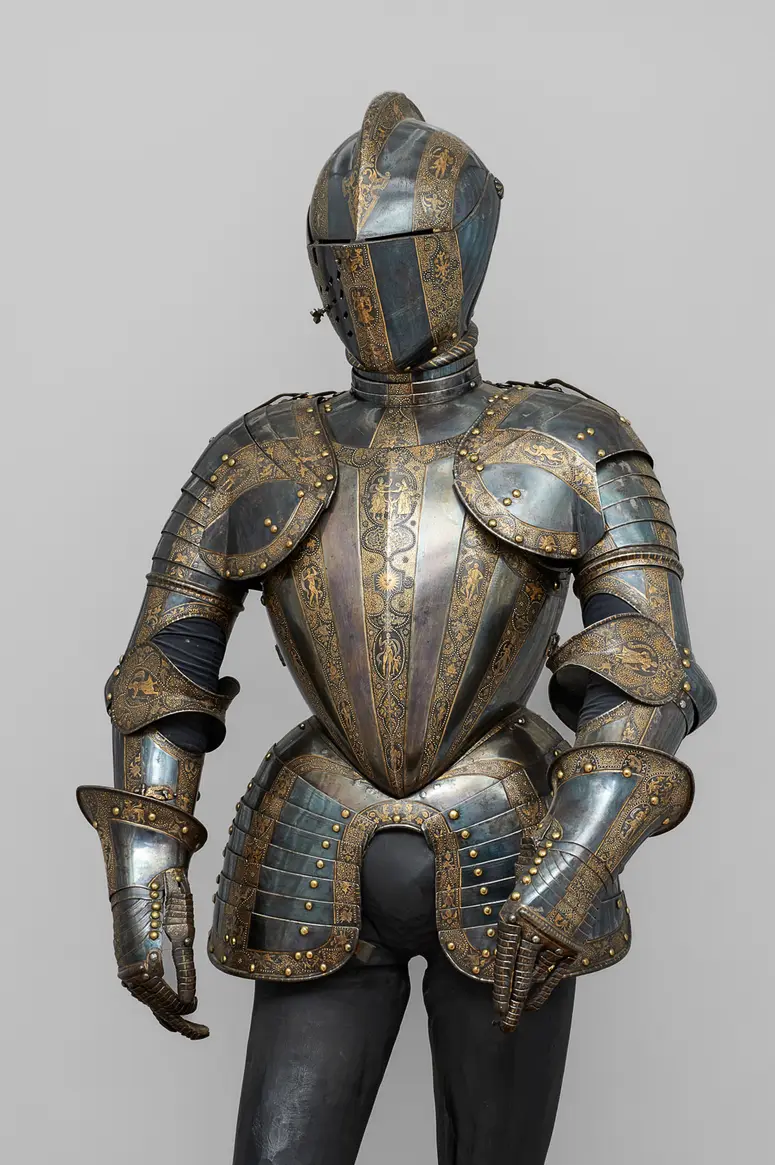
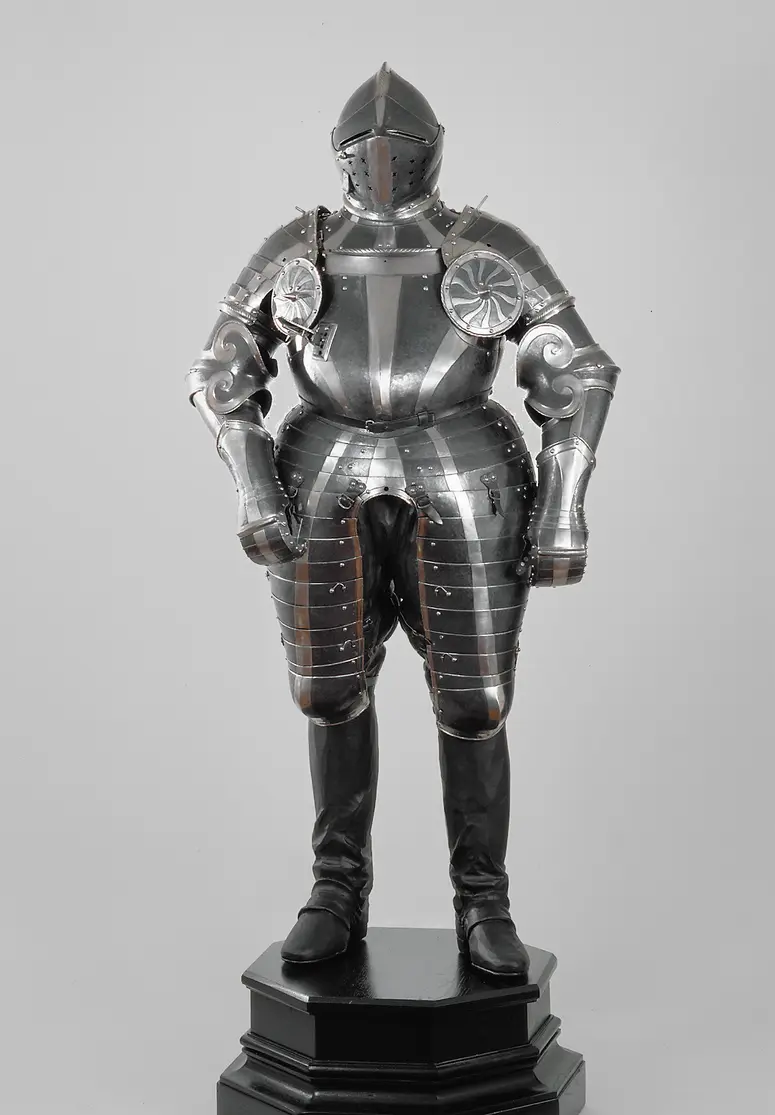
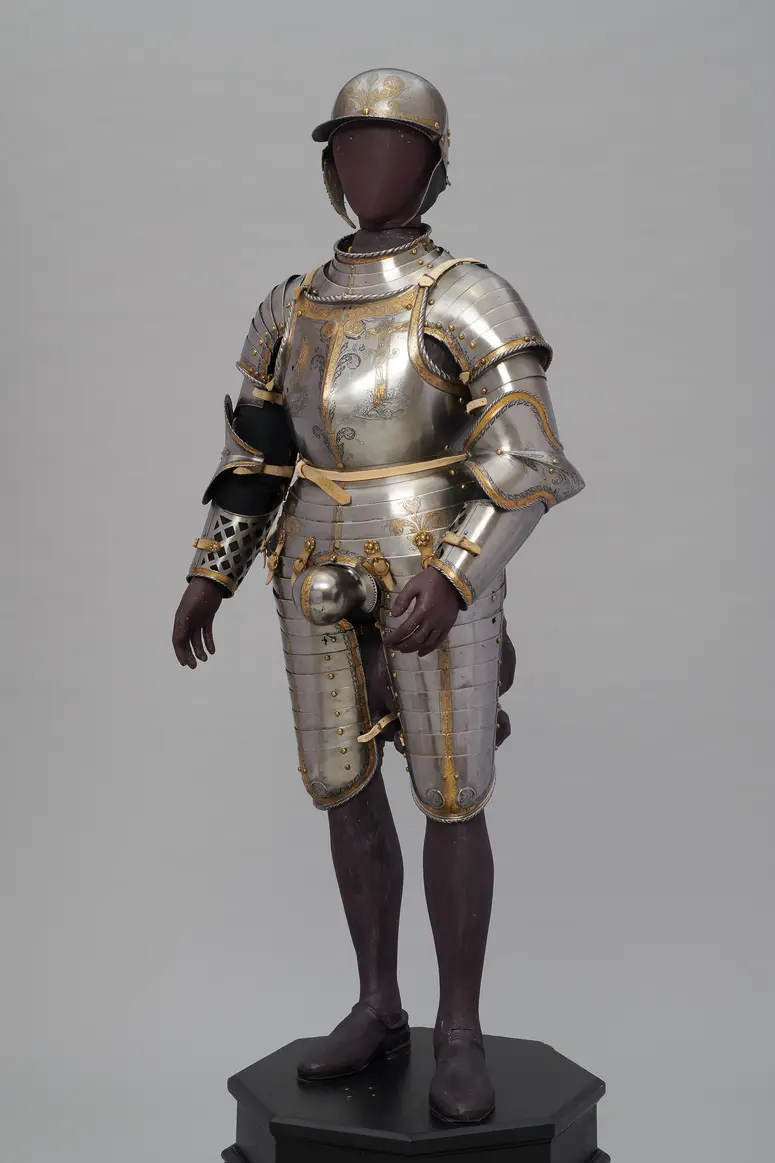
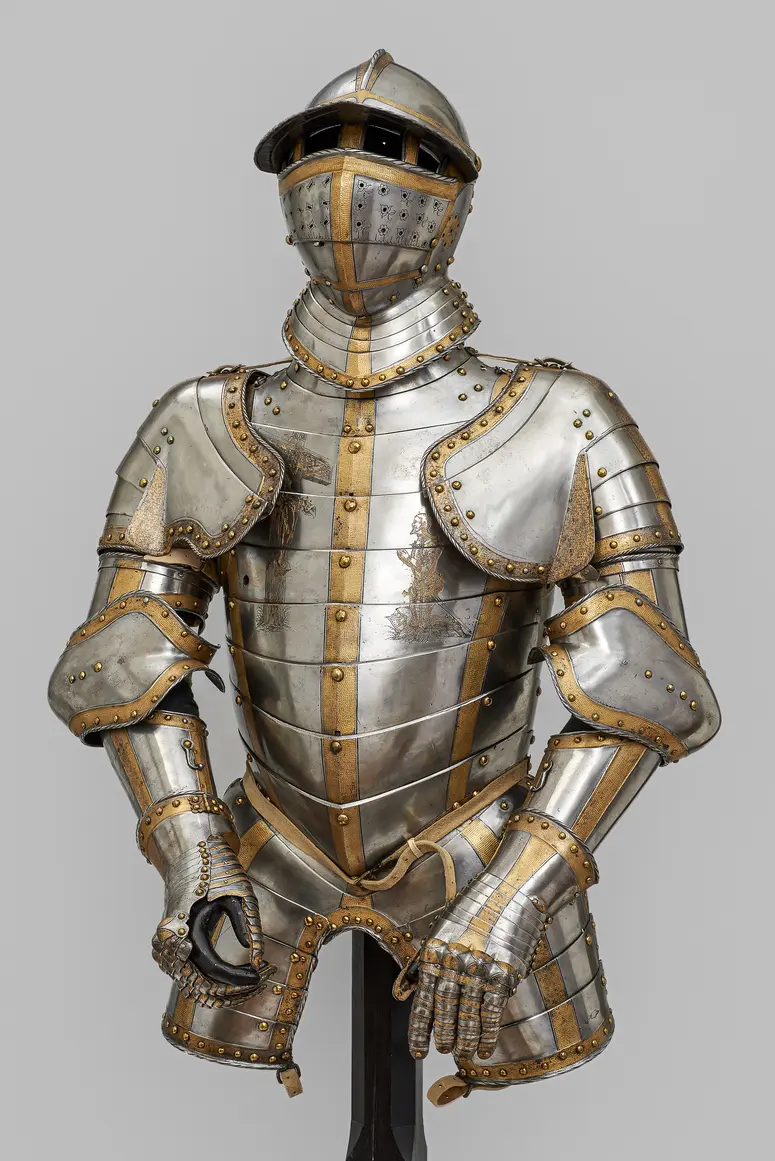
Charles V commissioned this armor from his Augsburg court armourer Desiderius Helmschmid in 1544 for his then 17-year-old son Philipp. The armour was once part of a large garniture, additional pieces of which have survived in Madrid (Real Armería, invs. A 189 et al).
In 1571, the imperial diplomat Adam of Dietrichstein journeyed to Austria, bringing with him this armour and another one made for Emperor Charles V (inv. A 546) as gifts from Philip II, King of Spain, for Archduke Ferdinand II. Dietrichstein was accompanying Archduke (later Emperor) Rudolf II and his younger brother Ernest, who were returning to Austria after a lengthy sojourn at the court of their uncle, Philip II.
Back in Austria there seems to have been some delay in transporting these two armours from Vienna to Innsbruck, because the following February we find Ferdinand impatiently enquiring about them. He asked for them to be ‘carefully packed’ (gut verpackt) and to be dispatched to Innsbruck immediately. They seem to have arrived in the spring of 1572 and were installed in the Armoury of Heroes at Ambras Castle. Philip’s armour was first listed in the 1583 inventory as ‘Philip II, King in Spain. A white cuirass with gilt and etched bands’ (Phillipus der Ander, könig in Hispnia. Ain plankher khürisz mit verguldten und göczten reifen).
Today, Philip’s armour is displayed without a helmet because whoever packed the pieces in Madrid in 1571 packed the wrong helmet. The helmet mistakenly dispatched to Vienna is a close burgonet (Kunsthistorisches Museum Vienna, Imperial Armoury, inv. A 546b) from the so-called Algiers Garniture made for Charles V around 1540 that also remains in Madrid.
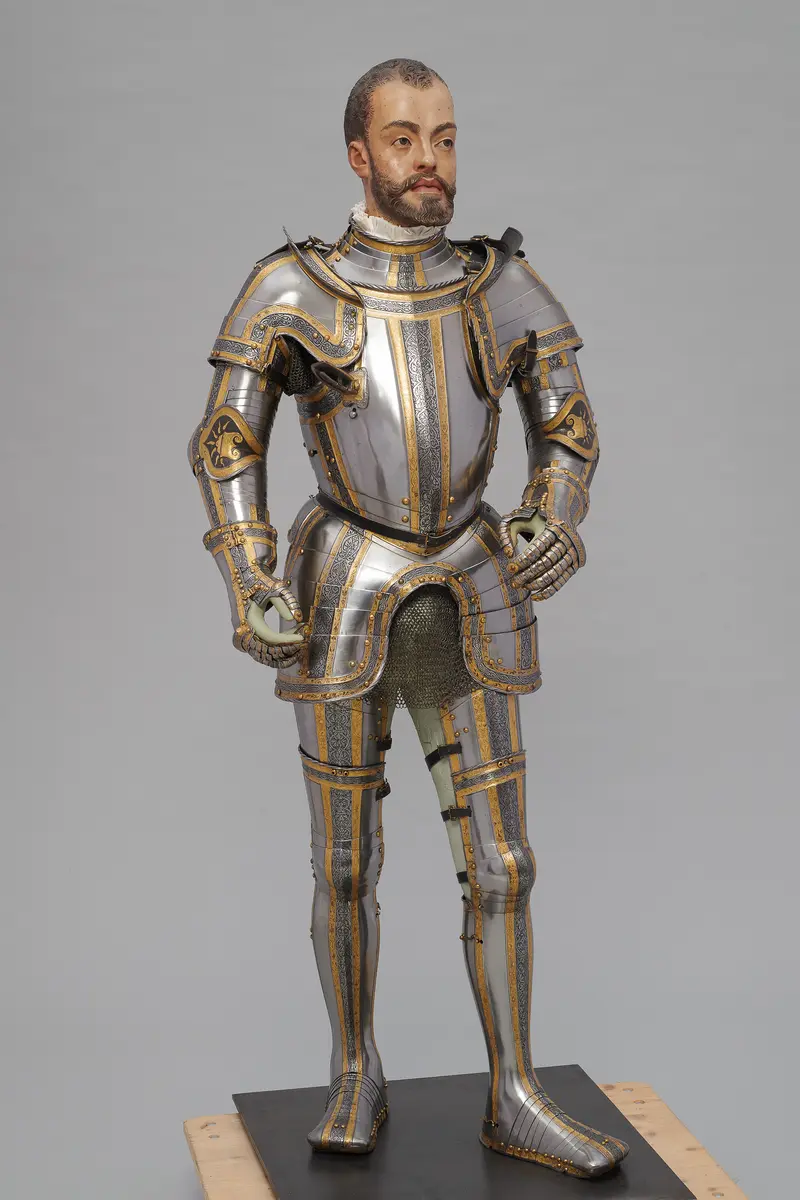
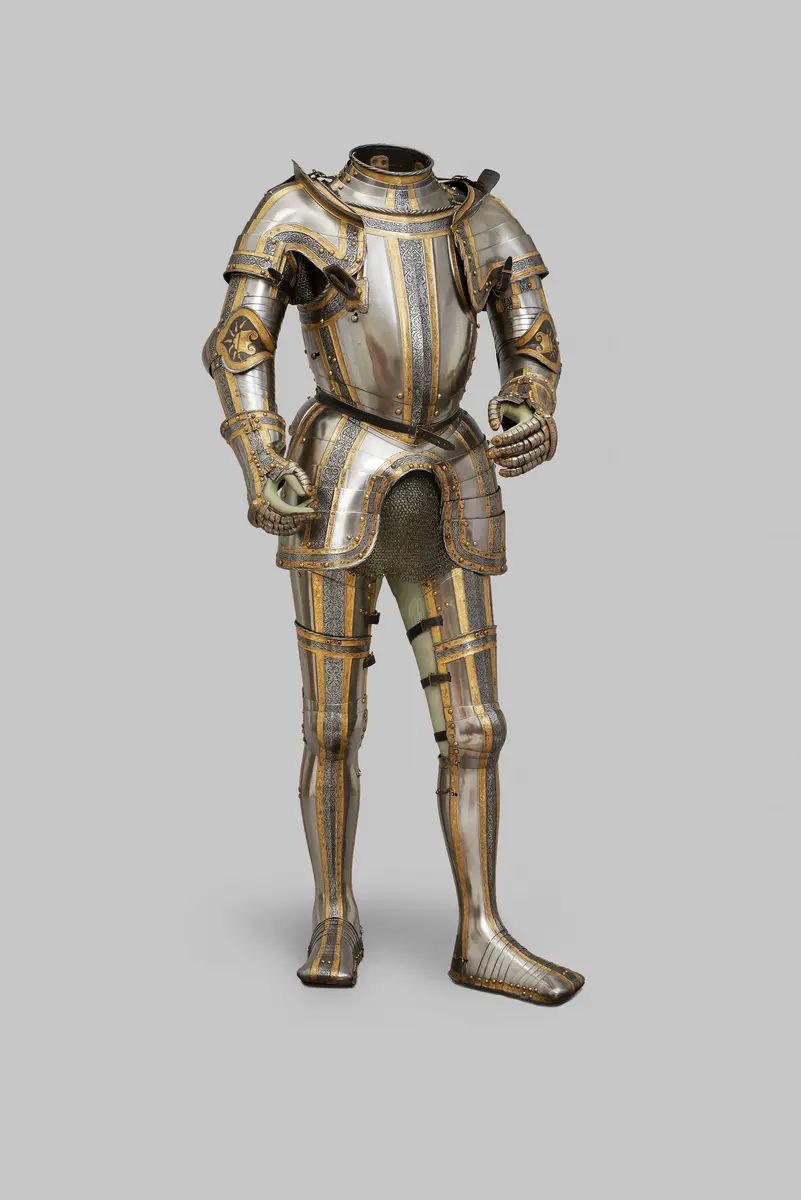
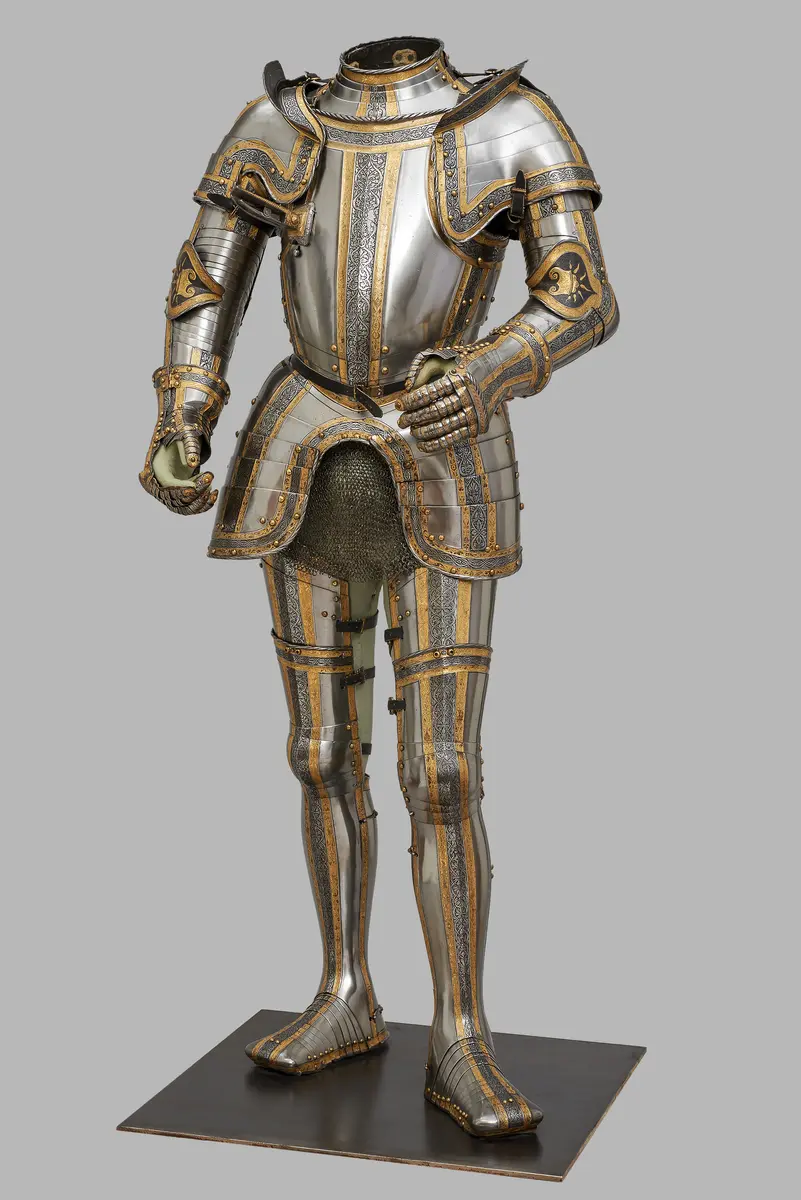
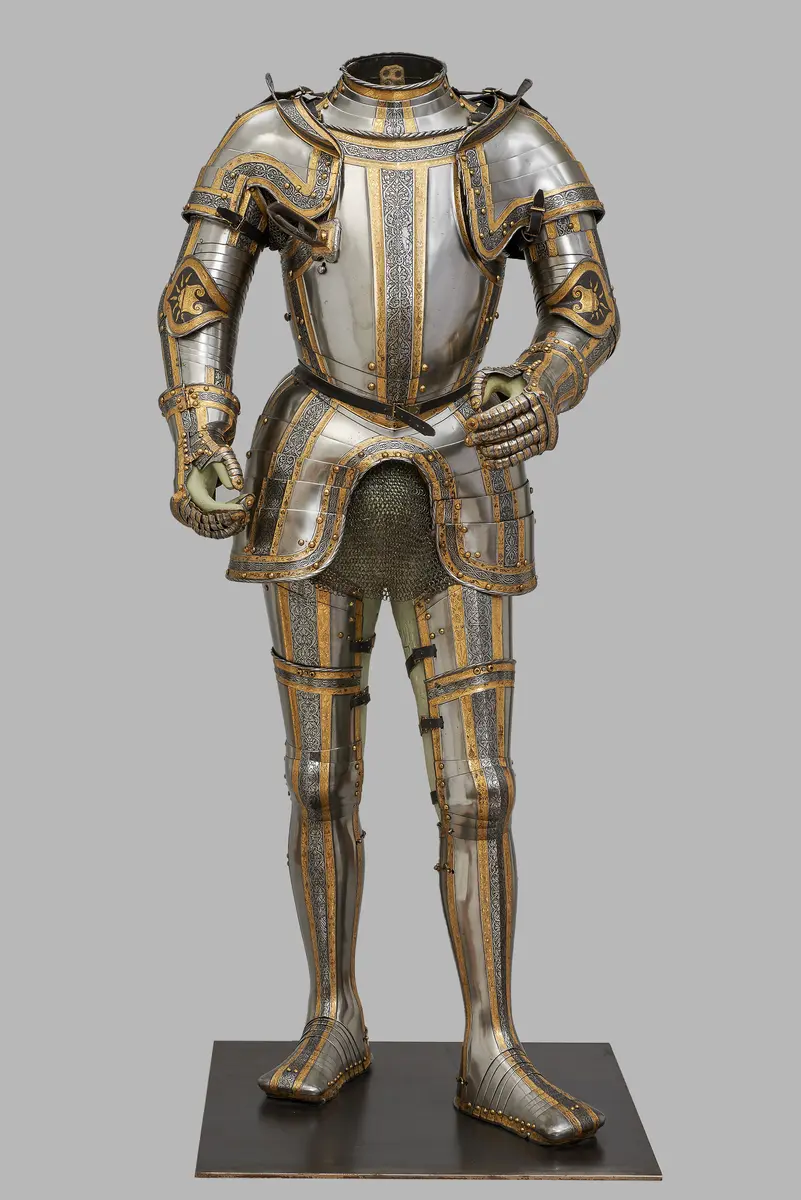
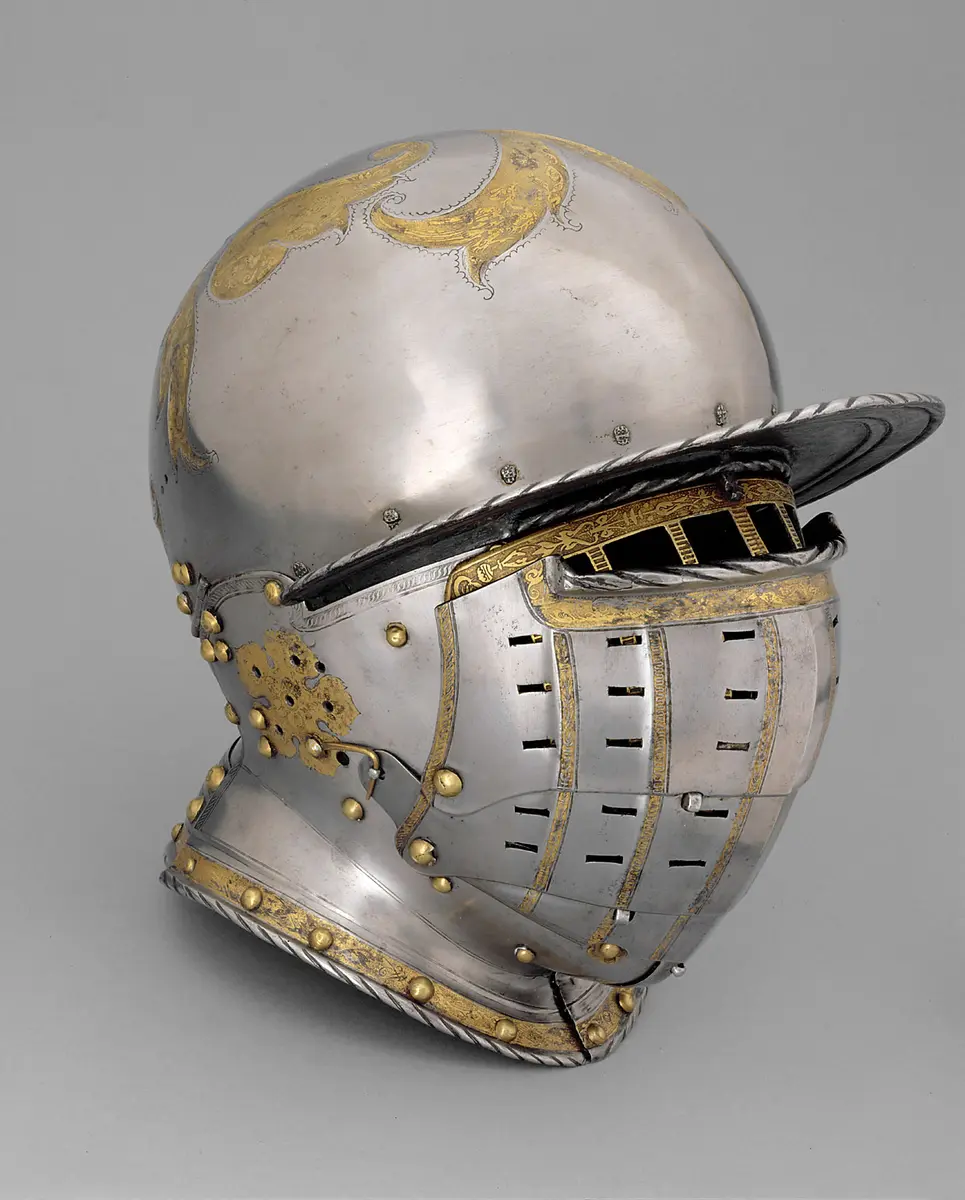
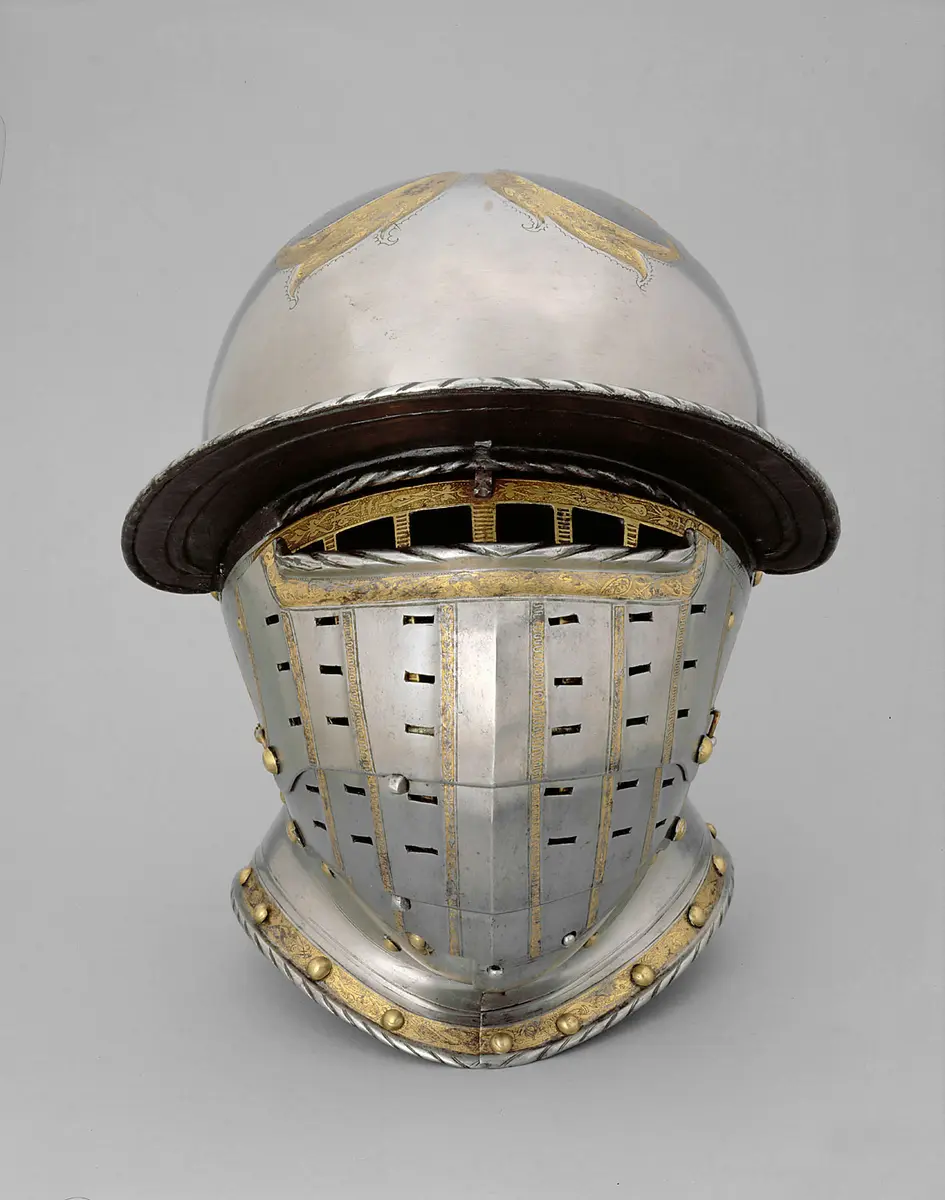
Charles V commissioned this armor from his Augsburg court armourer Desiderius Helmschmid in 1544 for his then 17-year-old son Philipp. The armour was once part of a large garniture, additional pieces of which have survived in Madrid (Real Armería, invs. A 189 et al).
In 1571, the imperial diplomat Adam of Dietrichstein journeyed to Austria, bringing with him this armour and another one made for Emperor Charles V (inv. A 546) as gifts from Philip II, King of Spain, for Archduke Ferdinand II. Dietrichstein was accompanying Archduke (later Emperor) Rudolf II and his younger brother Ernest, who were returning to Austria after a lengthy sojourn at the court of their uncle, Philip II.
Back in Austria there seems to have been some delay in transporting these two armours from Vienna to Innsbruck, because the following February we find Ferdinand impatiently enquiring about them. He asked for them to be ‘carefully packed’ (gut verpackt) and to be dispatched to Innsbruck immediately. They seem to have arrived in the spring of 1572 and were installed in the Armoury of Heroes at Ambras Castle. Philip’s armour was first listed in the 1583 inventory as ‘Philip II, King in Spain. A white cuirass with gilt and etched bands’ (Phillipus der Ander, könig in Hispnia. Ain plankher khürisz mit verguldten und göczten reifen).
Today, Philip’s armour is displayed without a helmet because whoever packed the pieces in Madrid in 1571 packed the wrong helmet. The helmet mistakenly dispatched to Vienna is a close burgonet (Kunsthistorisches Museum Vienna, Imperial Armoury, inv. A 546b) from the so-called Algiers Garniture made for Charles V around 1540 that also remains in Madrid.
Artist:
Desiderius Helmschmid (Plattner), zugeschrieben (1513 - 1579, tätig in Augsburg) DNB
Time:
1544
Object Name
Field armour
Culture
Augsburg
Material/technology:
Iron, forged, partly etched. Etching: partly fire-gilded, partly blackened, partly filled with black pigment (modern). Leather (partly modern). Rivet caps, buckles, hooks, rosettes: brass, partly fire-gilded. Mail: Iron wire.
Dimensions:
H (inkl. Kopf, inkl. Eisenplatte) 171 cm x B 69 cm x T 60 cm
H (exkl. Eisenplatte) 167 cm × B 69 cm × T 60 cm
Höhe der Figurine exkl. Kopf, exkl. Eisenplatte: 147 cm
Gesamtgewicht exkl. Figurine, exkl. Eisenplatte: 17,00 kg
Signed
Rücken: V H für Ulrich Holzmann (erw. 1534-1562), Ätzer
Inscribed
Innen in Schulter in heller Schrift "ii" oder "II" oder "11"
Copyright
Kunsthistorisches Museum, Hofjagd- und Rüstkammer
Invs.
Hofjagd- und Rüstkammer, A 547
Browse more
Similar items you might be interested in
Philipp I. (1482-1506), Herzog von Burgund, seit 1504 König von Kastilien und León c. 1485/1490
Riefelharnisch von Pfalzgraf Philipp bei Rhein um 1525

Philipp I. (1482-1506), Herzog von Burgund, seit 1504 König von Kastilien und León 1488/89
Maximilian I. (1477-1519), seit 1493 deutscher König, 1508 Kaiser um 1500
Karl von Österreich, Sohn des Tiroler Landesfürsten Erzherzog Ferdinands II. von Habsburg und der Philippine Welser datiert 1582
Philipp I. (1482-1506), Herzog von Burgund, seit 1504 König von Kastilien und León c. 1490
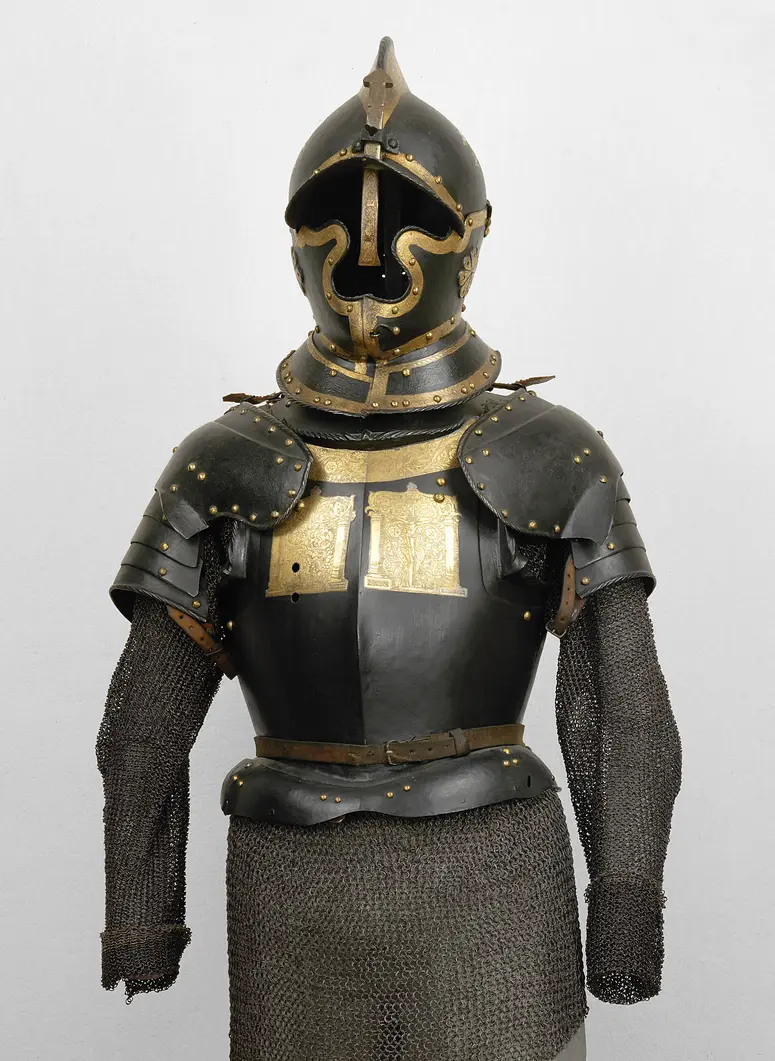
Trabharnisch des Andreas Teufel (Andre Teuffel), Rüstung des Andreas Teufel um 1555
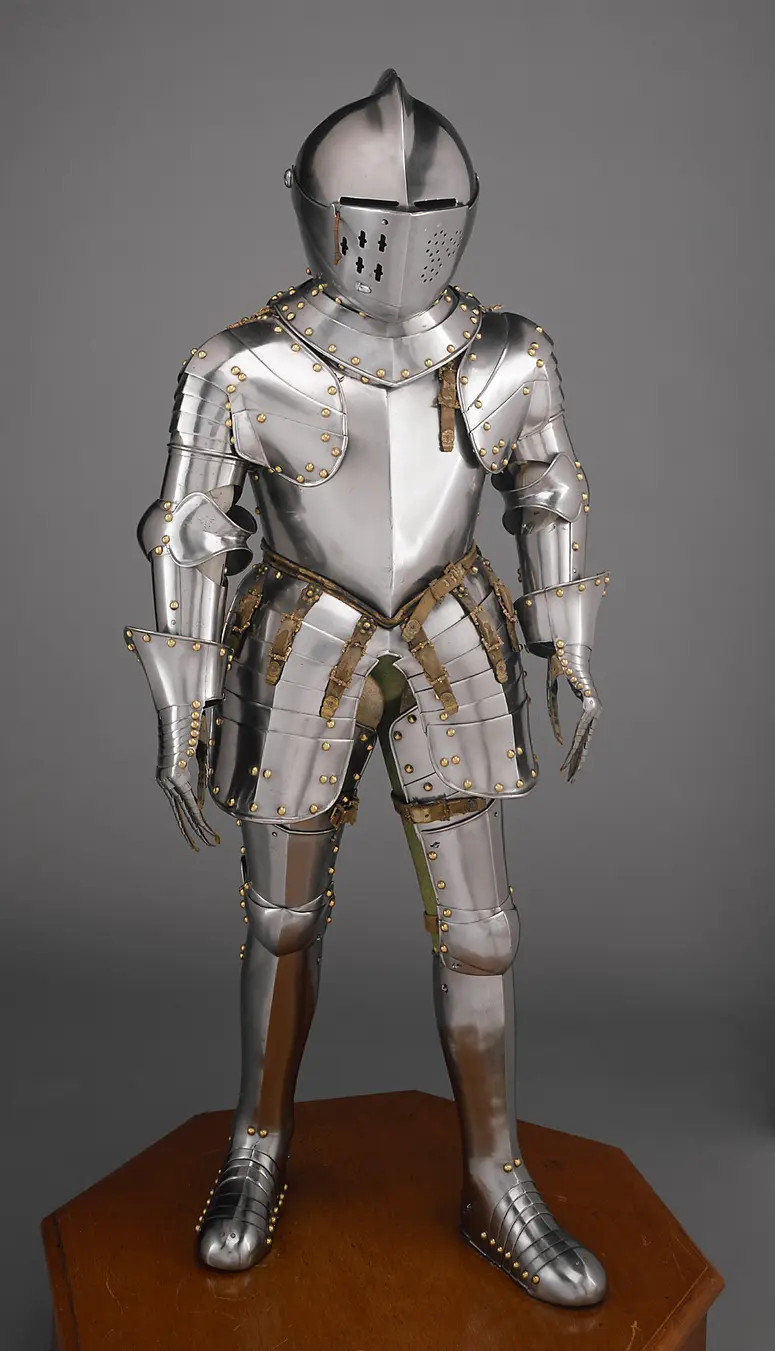
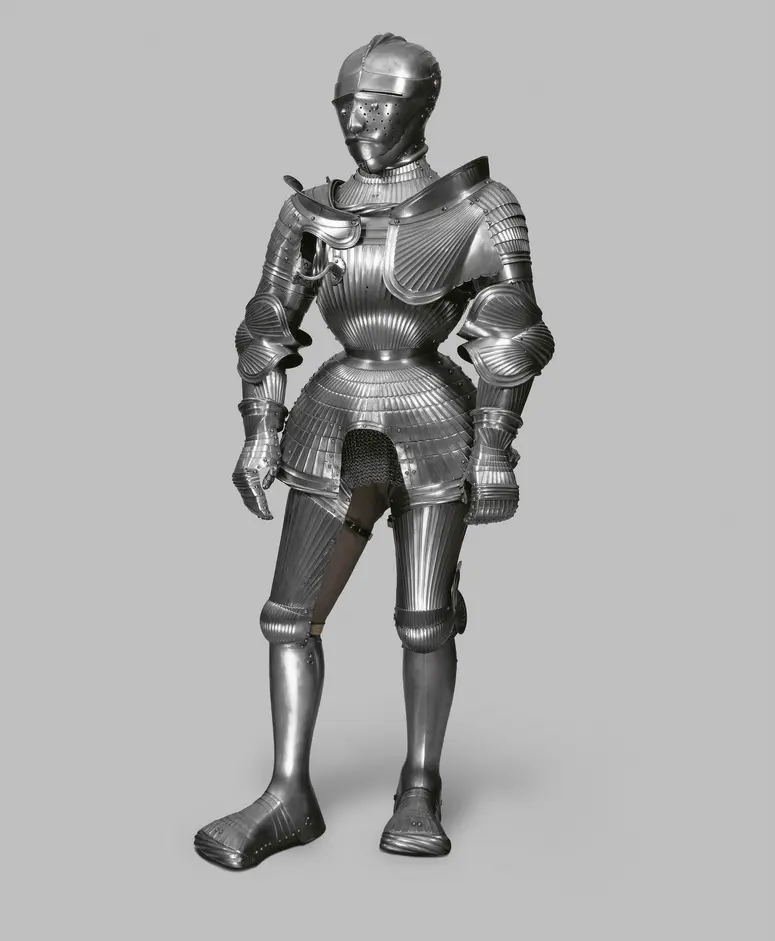
Ulrich (1498-1550), Herzog von Württemberg c. 1525-1530
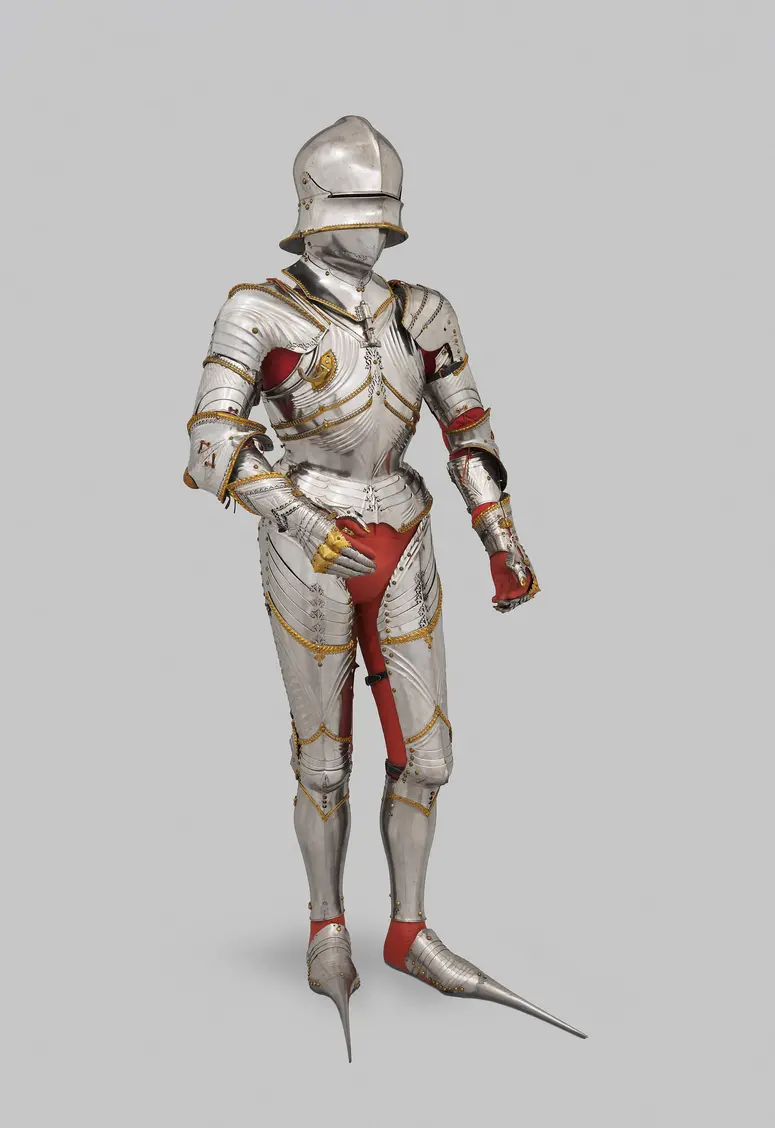
Maximilian I. (1477-1519), seit 1493 deutscher König, 1508 Kaiser um 1485
König Philipp III. von Spanien (1578-1621), Bildnis im Harnisch Andres López Polanco nach 1617
Ulrich (1498-1550), Herzog von Württemberg um 1545
Konrad von Boineburg (von Bemelberg) um 1535-1540
Fernando Alvarez de Toledo, Herzog von Alba um 1546
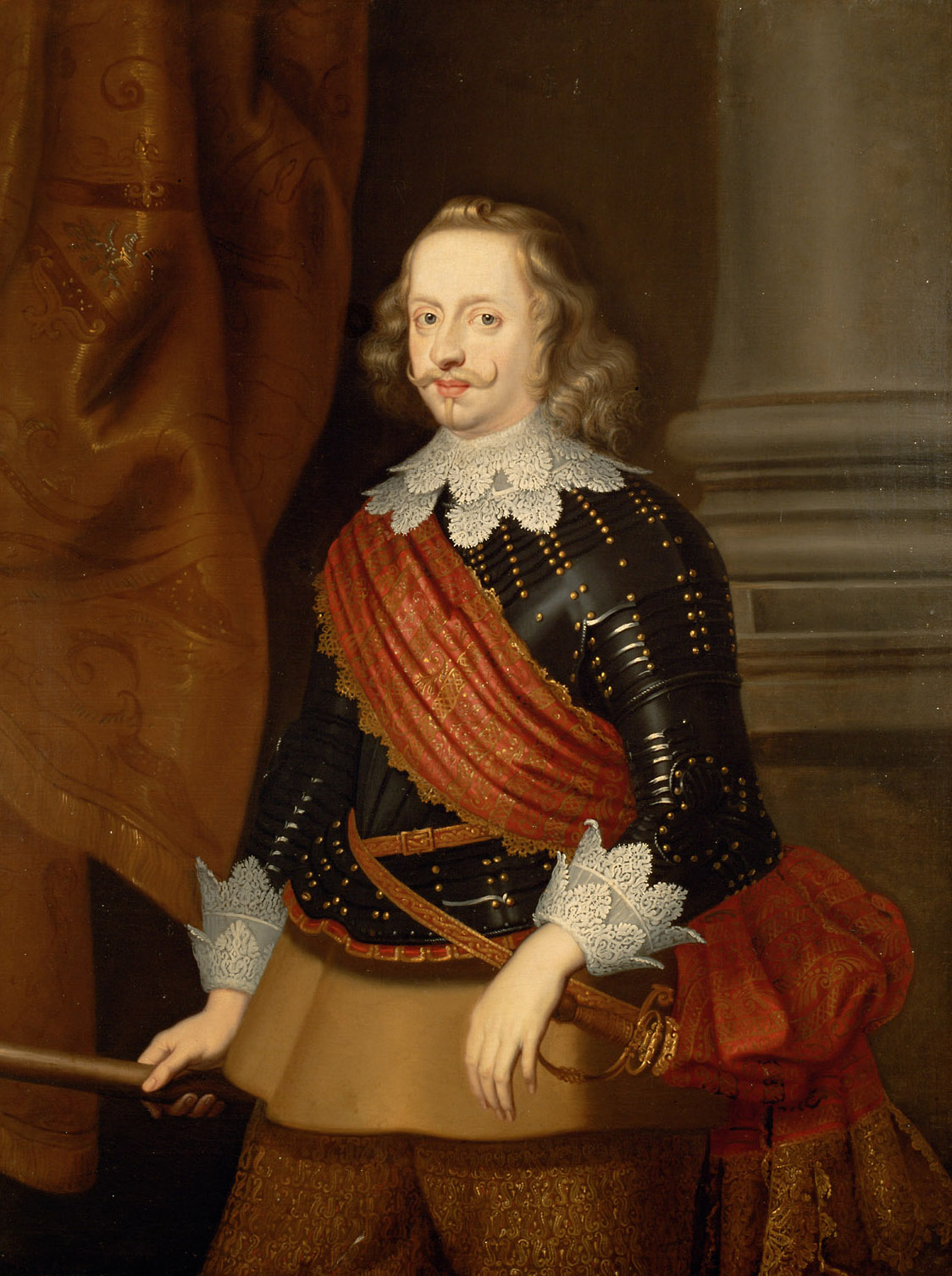
Kardinal-Infant Ferdinand (1609-1641) im Harnisch, Kniestück Flämisch um 1640