Das Thron-Wiegenbett des Königs von Rom
1811 datiert | Pierre-Paul Prud'hon
The cradle was a gift from the city of Paris to Napoleon and his second wife, Marie-Louise, on the occasion of the birth of their son, Napoléon-François-Charles-Joseph, on 20 March 1811. In keeping with the tradition of the Holy Roman Empire, the father immediately bestowed the title of "king of Rome" upon the newborn child, which is why the cradle had to have the magnificence of a throne. A ceremonial piece of furniture, it stood on a platform under a canopy in the Tuileries Palace, while a considerably simpler cradle of burlwood (Louvre) served for everyday use. An extravagant amount of silver - some 280 kilograms- was used in making the throne-shaped cradle. The rich symbolism in every detail emphasises the national importance attached to the birth of an heir to the throne. Supported by cornucopias as symbols of wealth as well as the genii of Justice and Power, the cradle has sides that are decorated with rows of bees. Napoleon had adopted the bee (modelled on the golden cicadas found in the grave of the Merovingian king Childeric) as his emblem instead of the lily of the Bourbon dynasty. At the foot of the cradle an eaglet (French: aiglon, as the prince was affectionately called) is perched, preparing to fly towards a star with Napoleon's monogram, which stands out from the wreath of stars. This wreath rests on top of an imperial laurel wreath held aloft by the personification of Glory and Victory, hovering above the niche at the back. The original tulle blanket, embroidered with bees, is preserved only in fragments. Following the fall from power of her husband in 1814, Marie-Louise brought this magnificent piece of furniture to Vienna. The cradle came into the possession of the Treasury in 1832 following the death of the former king of Rome (by then the Duke of Reichstadt).
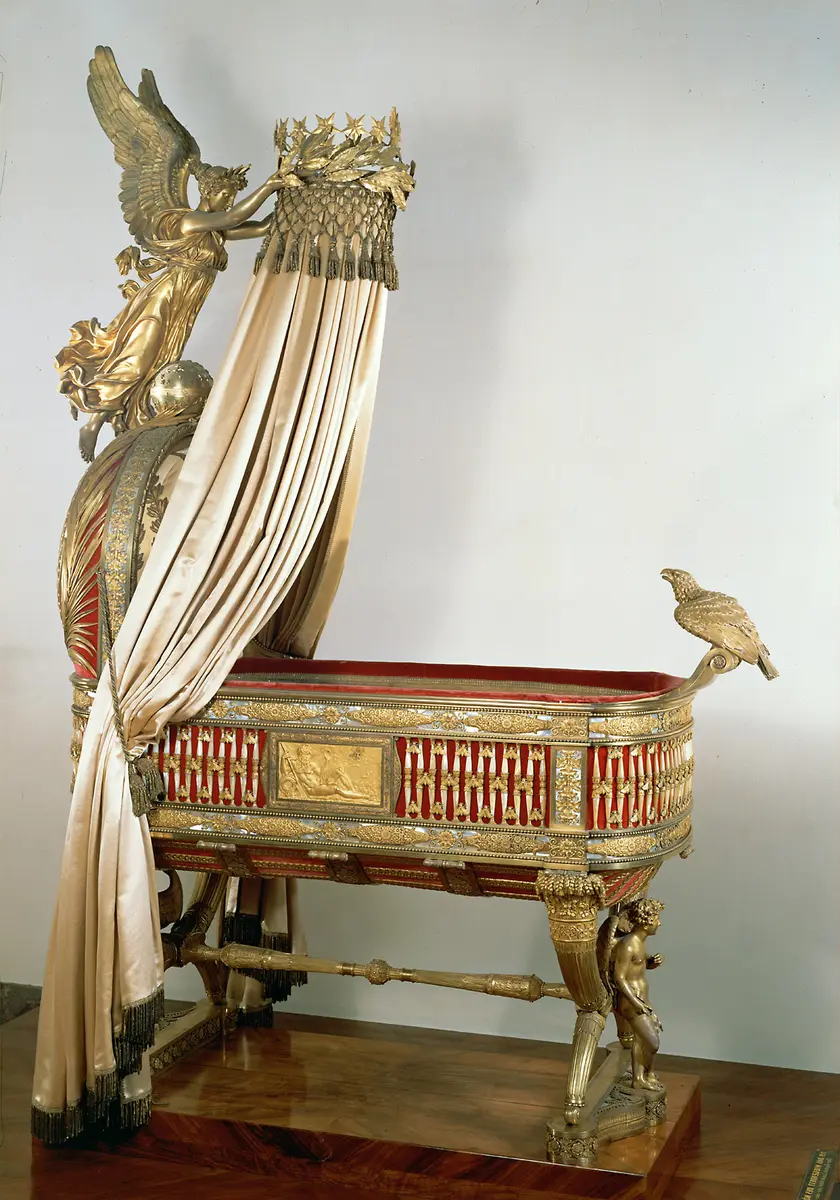
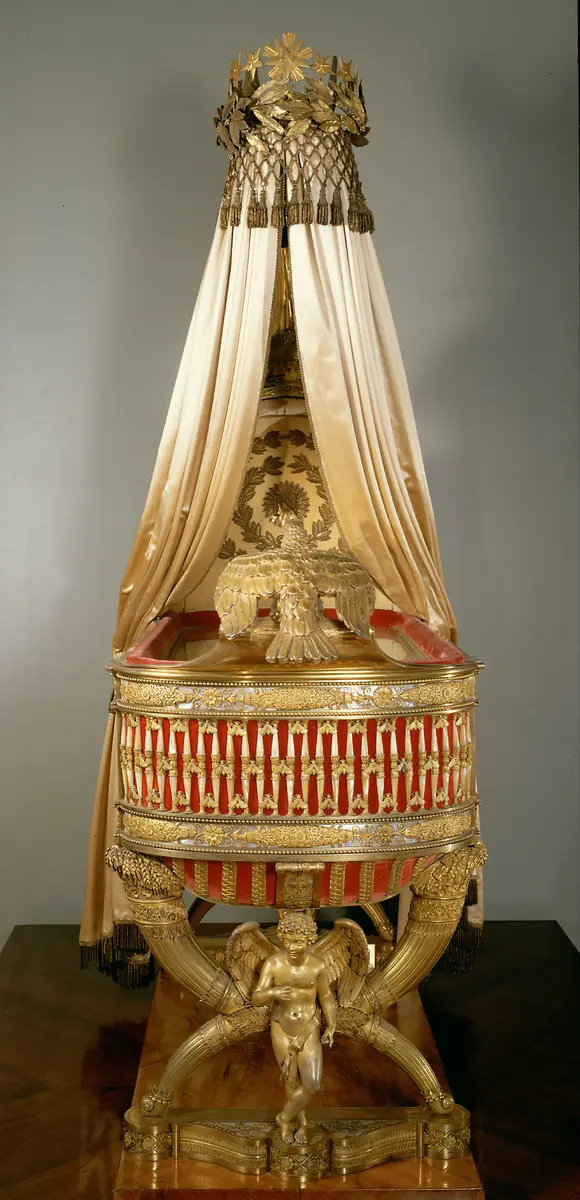
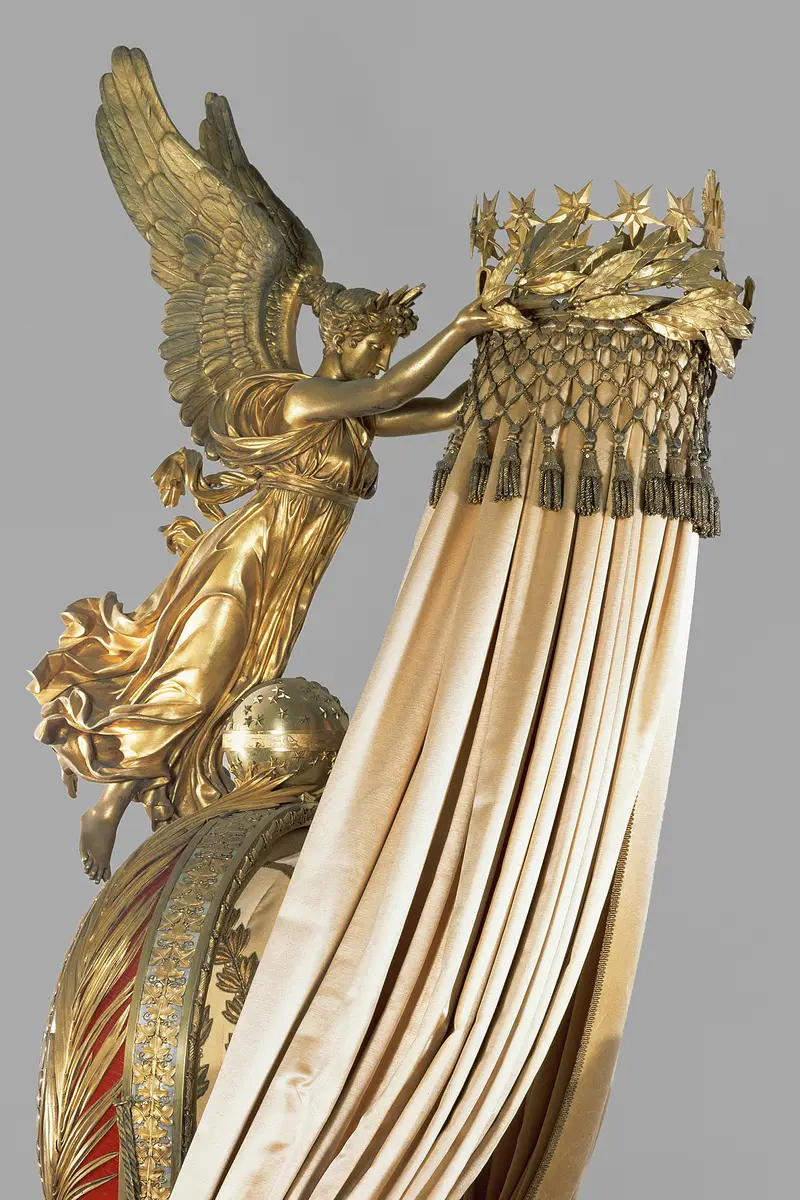
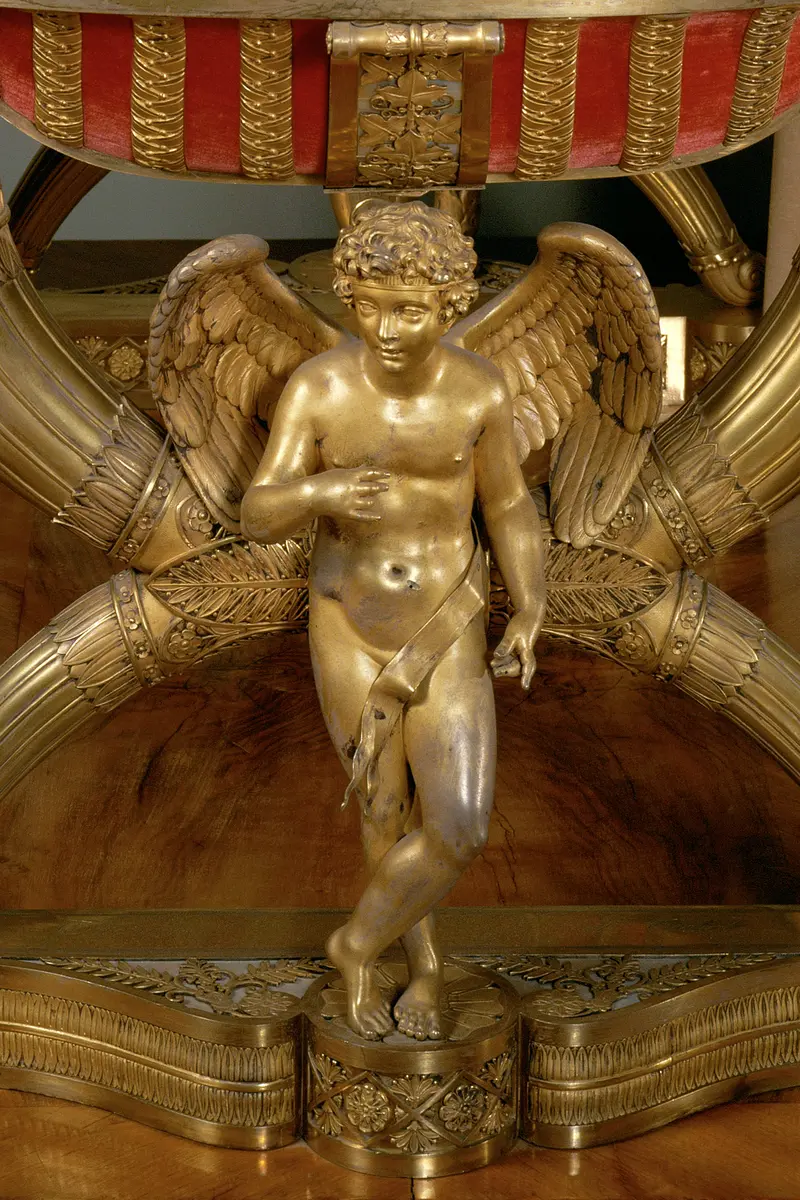
The cradle was a gift from the city of Paris to Napoleon and his second wife, Marie-Louise, on the occasion of the birth of their son, Napoléon-François-Charles-Joseph, on 20 March 1811. In keeping with the tradition of the Holy Roman Empire, the father immediately bestowed the title of "king of Rome" upon the newborn child, which is why the cradle had to have the magnificence of a throne. A ceremonial piece of furniture, it stood on a platform under a canopy in the Tuileries Palace, while a considerably simpler cradle of burlwood (Louvre) served for everyday use. An extravagant amount of silver - some 280 kilograms- was used in making the throne-shaped cradle. The rich symbolism in every detail emphasises the national importance attached to the birth of an heir to the throne. Supported by cornucopias as symbols of wealth as well as the genii of Justice and Power, the cradle has sides that are decorated with rows of bees. Napoleon had adopted the bee (modelled on the golden cicadas found in the grave of the Merovingian king Childeric) as his emblem instead of the lily of the Bourbon dynasty. At the foot of the cradle an eaglet (French: aiglon, as the prince was affectionately called) is perched, preparing to fly towards a star with Napoleon's monogram, which stands out from the wreath of stars. This wreath rests on top of an imperial laurel wreath held aloft by the personification of Glory and Victory, hovering above the niche at the back. The original tulle blanket, embroidered with bees, is preserved only in fragments. Following the fall from power of her husband in 1814, Marie-Louise brought this magnificent piece of furniture to Vienna. The cradle came into the possession of the Treasury in 1832 following the death of the former king of Rome (by then the Duke of Reichstadt).
Artist:
Pierre-Paul Prud'hon (1758 - 1823) DNB
Time:
1811 datiert
Object Name
Möbel; Wiegenbett
Culture
Paris
Material/technology:
Silber, vergoldet, Gold, Perlmutter, Samt (auf Kupferplatten aufgezogen), Seide und Tüll mit Gold- und Silberstickereien
Dimensions:
H. 216 cm
Signed
Odiot et Thomire; Thomire et Odiot
Inscribed
"OFFERT PAR LA VILLE DE PARIS L´AN 1811"
Copyright
Kunsthistorisches Museum, Weltliche Schatzkammer
Invs.
Schatzkammer, WS XIV 28
Browse more
Similar items you might be interested in
Madonna J. Löwy, K. und K. Hof-Photograph, Kunst- und Verlagsanstalt (Wien) 1888 bis 1910
Geflügelhof J. Löwy, K. und K. Hof-Photograph, Kunst- und Verlagsanstalt (Wien) 1888 bis 1891
Geflügel J. Löwy, K. und K. Hof-Photograph, Kunst- und Verlagsanstalt (Wien) 1888 bis 1910
Erzherzogin Elisabeth Charlotte J. Löwy, K. und K. Hof-Photograph, Kunst- und Verlagsanstalt (Wien) 1888 bis 1891
Fürstliches Bildnis J. Löwy, K. und K. Hof-Photograph, Kunst- und Verlagsanstalt (Wien) 1888 bis 1910
Porträt des Ferdinand Bonaventura Grafen von Harrach J. Löwy, K. und K. Hof-Photograph, Kunst- und Verlagsanstalt (Wien) 1888 bis 1910
Feldmarschall Johann Josef Graf Harrach J. Löwy, K. und K. Hof-Photograph, Kunst- und Verlagsanstalt (Wien) 1888 bis 1910
Daniel Sadeler Klinge: um 1600; Fassung: 1. Drittel 17. Jahrhundert
The Infant Christ with John the Baptist and Two Angels Peter Paul Rubens about 1615/20